Elevating Brand Identity with the Modern Vertical Paper Card Mockup
In the competitive landscape of visual branding, the presentation of a design concept is often just as critical as the design itself. Whether you are a graphic designer pitching to a high-profile client, a small business owner establishing a new identity, or a creative director refining a corporate stationery suite, the ability to visualize a final product in a realistic setting is paramount. This is where the Modern Vertical Paper Card Mockup serves as an indispensable tool. By bridging the gap between digital flat files and tangible reality, this resource allows creators to present their work with a level of sophistication that static images simply cannot achieve.
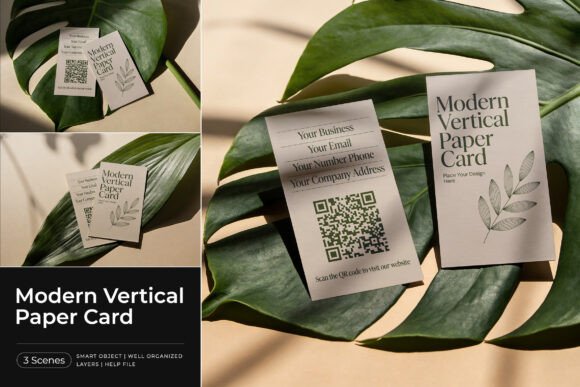
The shift toward vertical orientation in business card design reflects a broader trend in modern aesthetics, moving away from traditional horizontal layouts to maximize vertical screen real estate and create a distinctive profile in a wallet or cardholder. However, showcasing these unique formats requires specific contextual environments. The integration of tropical monstera leaves and soft natural lighting within this mockup collection provides a botanical backdrop that enhances the clean paper texture while maintaining a sharp focus on the card design. This article explores the practical applications, technical advantages, and strategic value of utilizing such high-fidelity mockups in professional workflows.
The Strategic Value of Contextual Presentation
When presenting a brand identity, the environment in which the logo or card appears tells a story before a single word is read. A Modern Vertical Paper Card Mockup that features organic elements like monstera leaves does more than just display a file; it evokes a feeling. The natural atmosphere suggests growth, freshness, and an eco-conscious mindset, which can be particularly effective for brands in wellness, sustainability, architecture, or lifestyle sectors.
For professionals, the psychological impact of a well-rendered mockup cannot be overstated. Clients often struggle to visualize how a two-dimensional vector file will translate to physical stock. By placing the design onto a textured paper surface with realistic shadows and lighting interactions, you provide a tangible sense of the final product. The soft natural lighting included in these scenes mimics the way human eyes perceive objects in the real world, reducing cognitive load for the viewer and allowing them to appreciate the nuances of the typography and color palette without distraction.
Enhancing Perceived Value Through Texture and Light
The fidelity of a mockup is determined by its attention to detail. High-resolution assets, such as those offering 4500 × 3000 px dimensions, ensure that every fiber of the paper and every subtle gradient in the lighting is captured. When a design is applied to a Modern Vertical Paper Card Mockup, the smart object technology preserves the integrity of the original artwork while adapting it to the contours and lighting conditions of the scene.
This level of detail highlights the quality of the paper stock. In the physical printing world, paper weight, finish (matte vs. glossy), and texture play huge roles in perceived luxury. A digital mockup that accurately simulates these properties allows designers to make informed decisions about print specifications before a single sheet is ordered. It acts as a virtual proofing stage, ensuring that the chosen colors do not clash with the underlying paper tone and that fine details remain legible under natural light conditions.
Technical Workflow and Efficiency
Beyond the aesthetic benefits, the primary utility of these tools lies in their ability to streamline the creative workflow. Time is a finite resource for creators, and manually photographing physical prototypes for every iteration of a design is often impractical due to cost and logistics. The Modern Vertical Paper Card Mockup solves this by offering a fully editable, layer-based structure within Adobe Photoshop.
The process is designed for speed and precision. Users typically begin by opening the provided PSD file, which contains pre-configured smart objects. These smart objects act as windows into the 3D rendering engine of the software. By double-clicking the smart object layer, the user opens a separate document where they can insert their flat design file. Once saved, the main mockup file instantly updates, wrapping the design around the card geometry and applying the necessary displacement maps, shadows, and highlights.
- Layer Organization: Professional mockups feature well-organized layers, allowing users to toggle background elements, adjust lighting intensity, or modify color grades without affecting the core design.
- Non-Destructive Editing: Because the design resides in a smart object, the original file remains untouched. This allows for endless iterations and A/B testing of different colorways or layout variations.
- High-Resolution Output: With resolutions reaching 4500 pixels in width, the final output is suitable for large-scale presentations, high-density retina displays, and even print portfolios.
Versatility Across Industries
While the immediate application is obvious for graphic designers, the utility of a Modern Vertical Paper Card Mockup extends to a wide array of professionals. Marketing managers can use these visuals for social media campaigns, creating aspirational content that showcases company culture. Educators teaching brand strategy can use them to demonstrate how context influences brand perception. Even real estate agents or consultants can utilize these templates to create cohesive personal branding packages that stand out in a sea of generic horizontal cards.
The vertical orientation specifically caters to modern branding styles that prioritize mobile-first thinking. As most digital interactions occur on smartphones with vertical screens, a vertical business card creates a subconscious link between the physical token and the digital experience. Using a mockup that emphasizes this orientation helps stakeholders visualize how the brand translates across different mediums.
Considerations for Effective Implementation
To maximize the effectiveness of these tools, users must consider the relationship between their design and the mockup environment. The botanical theme of the monstera leaf background is versatile, but it is not universal. Designs that rely heavily on earth tones, greens, or minimalist black-and-white palettes tend to harmonize best with this specific setting. Conversely, a neon-heavy or industrial design might require a different contextual backdrop to avoid visual dissonance.
Furthermore, understanding the limitations of digital representation is crucial. While a Modern Vertical Paper Card Mockup provides a highly accurate preview, it cannot replace a physical print proof for checking exact color matching (Pantone vs. CMYK) or tactile feel. It should be viewed as a powerful communication bridge rather than a final quality control step for manufacturing. The model images and photographs included are for presentation purposes, meaning the focus should remain on the inserted artwork rather than the props themselves.
Best Practices for Customization
When customizing the file, attention should be paid to the lighting layers. Many advanced mockups include adjustment layers that control the brightness and contrast of the scene. Tweaking these can help match the mockup's ambient light to the specific mood of the brand being presented. Additionally, ensuring that the inserted design file has the correct bleed and safe zones is vital. Since the mockup simulates a physical cut, any critical text or logos placed too close to the edge may appear truncated or awkwardly positioned once the perspective transformation is applied.
Creators should also leverage the multiple scenes often included in these packs. A comprehensive set might offer three distinct PSD files, each with a slightly different angle or composition of the monstera leaves. Rotating through these scenes can provide a dynamic portfolio presentation, showing the brand identity from multiple viewpoints and demonstrating thoroughness in the design process.
The Role of Mockups in Modern Brand Storytelling
In an era where digital presence is dominant, the tactile nature of printed materials carries a renewed sense of prestige. A business card is no longer just a method of contact exchange; it is a micro-canvas for brand expression. The Modern Vertical Paper Card Mockup facilitates this expression by providing a stage where the interplay of nature, light, and paper converges.
By utilizing high-quality, naturally lit environments, brands can communicate values of transparency, organic growth, and elegance without explicitly stating them. The visual language of the mockup reinforces the narrative of the design. For instance, a consultant specializing in environmental law would find immense value in presenting their credentials against a backdrop of lush greenery, subtly reinforcing their area of expertise through visual association.
Ultimately, the goal of using such tools is to reduce the friction between idea and realization. They empower users to experiment boldly, knowing that they can visualize the outcome instantly. Whether for a solo entrepreneur crafting a personal logo or a large agency developing a comprehensive corporate identity system, the ability to present work in a polished, realistic manner is a competitive advantage. The Modern Vertical Paper Card Mockup stands as a testament to how digital tools can enhance physical creativity, ensuring that every design is seen in its best possible light.
As the industry continues to evolve, the demand for specialized, high-fidelity presentation assets will only grow. The intersection of botanical aesthetics and modern minimalism found in these vertical card scenes offers a timeless appeal that resonates with contemporary audiences. By mastering the use of these resources, creators can elevate their portfolios, impress clients, and bring their branding visions to life with clarity and style.